
Texture; the Styling Detail That Can Change an Entire Outfit
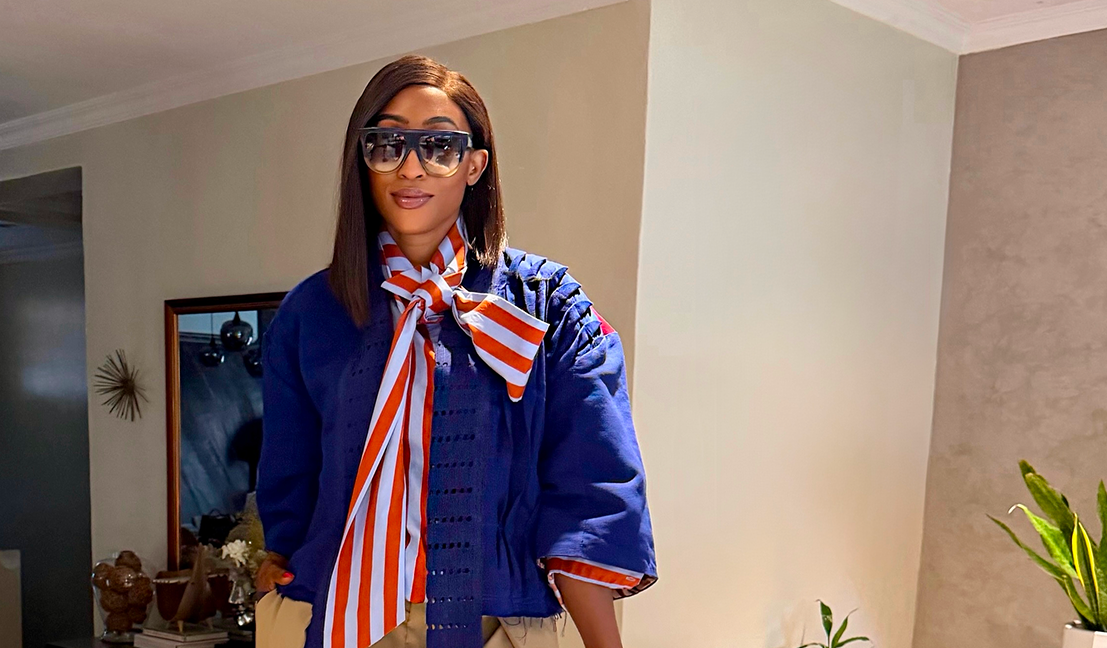
If an outfit feels a little flat, the answer may not be another colour, another accessory or another new piece. Look at the texture.
Texture is one of the easiest styling tools to overlook because it isn’t always the first thing we notice.
We notice colour. We notice silhouette. We notice the shoes, the bag, the statement piece.
But texture is often doing the quiet work that makes the whole outfit feel considered.
Think of the difference between a smooth satin skirt and a chunky knit. A crisp cotton shirt and soft suede. Sheer fabric against something opaque. Pleating against a clean, smooth surface.
The pieces may be similar in colour, but the outfit will read completely differently.
And that is where texture gets interesting.
Texture Isn’t Just About Fabric
When I talk about texture, I don’t only mean whether something feels soft, rough, smooth or heavy when you touch it.
Texture is also about how a surface looks and behaves within an outfit.
Pleats create movement.
Lace introduces delicacy.
Denim brings structure and familiarity.
Suede has a softer, more tactile finish.
Sequins catch the light.
Leather can add polish or edge.
A chunky knit brings visual weight.
Even something as simple as a ribbed fabric can change how an otherwise minimal outfit feels.
The point is not to collect as many textures as possible.
It’s knowing which textures are helping the outfit say what you want it to say.
One Texture Can Change the Mood
This is one of my favourite things about styling.
Take a simple black dress.
Wear it with a smooth leather bag and pointed shoes and it immediately feels more polished.
Add a textured knit over it with flat shoes and the same dress starts to feel much more relaxed.
Add embellished earrings and a metallic shoe and you’ve taken it somewhere completely different.
The dress hasn’t changed.
The relationship between the textures has.
That is why I always encourage women to look beyond the individual piece when they are getting dressed.
Don’t just ask, “Do I like this?”
Ask, “What happens when I put this next to what I’m already wearing?”
Use Texture to Create Contrast
Contrast is where texture really starts to earn its place.
Some of the easiest combinations are opposites:
Sheer + opaque
Smooth + textured
Soft + structured
Matte + shine
Fine + chunky
A delicate sheer blouse can look beautiful with a structured trouser.
A soft cashmere knit can work beautifully against a crisp cotton shirt.
A smooth satin skirt can become much more interesting when paired with a textured knit.
You don’t need dramatic pieces to create this effect.
Sometimes the contrast between two very ordinary wardrobe staples is enough.
Texture Can Break Up a Monochrome Outfit
One of the easiest ways to make a monochrome outfit more interesting is to stop thinking only about colour.
Imagine an outfit entirely in cream.
A cream silk blouse, cream tailored trousers and a cream smooth leather bag will create one kind of look.
Now change the textures.
Silk.
Wool.
Suede.
Leather.
Suddenly, there is more visual variation even though the colour hasn’t changed.
This is particularly useful if you love wearing neutrals.
You don’t necessarily need more colour.
You may simply need more variation in texture.
Think About Proportion, Too
Texture has visual weight.
A chunky knit naturally takes up more visual space than a fine silk camisole. A heavily embellished skirt carries more visual weight than a simple cotton one.
That matters when you’re putting an outfit together.
If you have a very textured or voluminous piece, you may want to balance it with something cleaner elsewhere.
For example, a heavily textured skirt can work beautifully with a simple, fitted top.
A chunky sweater can look more polished with a clean, tailored trouser.
This is where texture connects with one of the things I talk about constantly in styling: proportion.
It’s not enough for individual pieces to be beautiful.
They need to make sense together.
Texture Can Make Simple Pieces Feel More Interesting
You don’t need a wardrobe full of statement pieces.
In fact, I often prefer the opposite.
A well-cut trouser in an interesting fabric.
A beautifully textured jacket.
A knitted dress with an unusual finish.
A simple blouse with subtle pleating.
These pieces can give you much more styling potential than something that relies entirely on a bold print or dramatic detail.
This is also something I think about when selecting pieces for a wardrobe.
A good piece should give you options.
If the cut is right and the texture gives you something to work with, you can style it in different ways without the outfit feeling repetitive.
Don’t Forget Texture in Your Accessories
Texture isn’t limited to your clothes.
Your accessories can completely change the balance of an outfit.
Think about:
- A woven bag with a smooth tailored outfit
- Suede shoes with a crisp cotton look
- A silk scarf with a structured jacket
- A textured belt with a simple dress
- Statement jewellery against a clean neckline
- A knitted wrap over a sleek outfit
Sometimes the outfit you’re wearing is perfectly fine.
It’s the finish that’s missing.
And an accessory can provide that without requiring you to buy another outfit.
The Best Texture Combinations Usually Feel Effortless
There is a temptation when learning about styling to think that every outfit needs a formula.
It doesn’t.
You don’t need five different textures because you’ve read that texture adds interest.
You don’t need to deliberately contrast everything.
The best combinations usually feel natural.
Start with one piece you really want to wear.
Then look at what you’re pairing it with.
Is everything smooth?
Is everything soft?
Is everything structured?
Is there too much visual weight in one area?
Could a different texture make the outfit feel more balanced?
Those small questions can change the way you get dressed.
Start Looking at Your Wardrobe Differently
The next time you feel like you have nothing to wear, don’t immediately start shopping.
Open your wardrobe and look at the pieces differently.
Find something smooth and pair it with something textured.
Take a monochrome outfit and introduce a different finish.
Try a structured piece with something softer.
Take one of your simplest outfits and change the texture of the shoes, bag or outer layer.
You may be surprised by how different the same clothes can look.
Because good styling isn’t always about adding more.
Sometimes it’s about seeing what you already have differently.
And texture is one of the easiest places to start.
Save this for the next time an outfit feels like it’s missing something.
 Previous post
THE SMART SHOPPER’S STYLE GUIDE